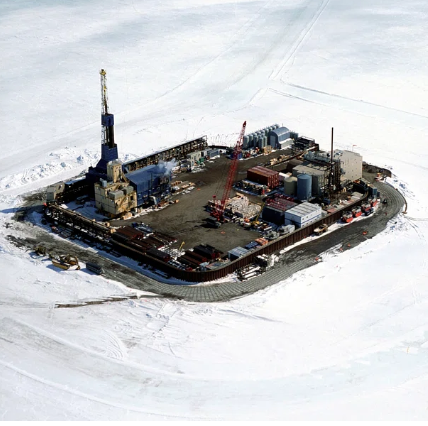
Oil is an important fossil fuel that is used for almost everything. It is used as the primary energy source for nearly all forms of transportation, and as a feedstock to countless products that we use in our everyday lives. Oil drilling has happened for thousands of years, dating all the way back to ancient times when people would use bamboo rigs to extract it. Although there are many economic benefits to oil drilling, it is extremely detrimental to our environment. The United States has started drilling in Alaska’s Arctic National Wildlife Refuge, and there are many problems with that.
Alaska’s Arctic National Wildlife Refuge is the nation’s largest refuge spanning 19 million acres of untouched arctic wilderness. As reported by the U.S. Fish and Wildlife Service, It is the home to dozens of different species and includes diverse landscapes. The refuge is approximately the size of South Carolina, and it has no roads or facilities. Another thing, unfortunately, is that it holds a lot of oil. According to a study from Yale University, it holds approximately 7.7 billion barrels, which is roughly equal to the U.S.’ consumption of oil in 2005. There has been lots of debate on if the United States should drill in Alaska due to the effects it would ultimately have on the environment. Animals would have to adapt to the new roads and buildings and drilling, which could alter their migratory patterns. It also can disrupt the water flow, putting these populations at risk.
On the other hand, drilling would boost the country’s economic status by having more job opportunities in Alaska and making the U.S. more energy independent. This would lead to a decrease in prices and an increase in tax money. Many believe that despite all the environmental damage, the economic boost is more important. This is where I disagree. I believe our environment is much more important in the long run, especially considering economic growth is never permanent. Everything we need in order to survive is made from this planet in one way or another, such as food, water, the clothes we wear, and the houses we live in. The earth we live on is a constant in all our lives, and it is crucial we try and preserve it as long as we can in order to ensure a livable planet for the future generations.