In 1952, ILLIAC I became the first computer that was created and owned entirely by an Educational Institution in the United States. In 1960, the PLATO program was implemented onto this computer. PLATO stands for Programmed Logic for Automatic Testing Operations, it marked the first computer-assisted instruction system and was able to display pages of textbooks to students upon command. At this time computers took up a large amount of space and were extremely expensive. With the invention and adoption of the microprocessor throughout the mid to late 1970s, computers became more accessible to schools than ever before.
In the 1980’s, computers like the Apple II and IBM PC were released and revolutionized the previously minuscule market of personal computing. According to a March 1985 Education Week article, “85.1 percent of the nation’s public schools reported using at least one microcomputer for instructional purposes”…“an increase from 18.2% in 1981” (Chion-Kenney). By the end of the 1980s computers were implemented into virtually every school district in America. In just 20 years, computers went from an expensive rarity in public schools to an everyday sight. It’s been almost 40 years of computers being common in schools and the effects have been major.
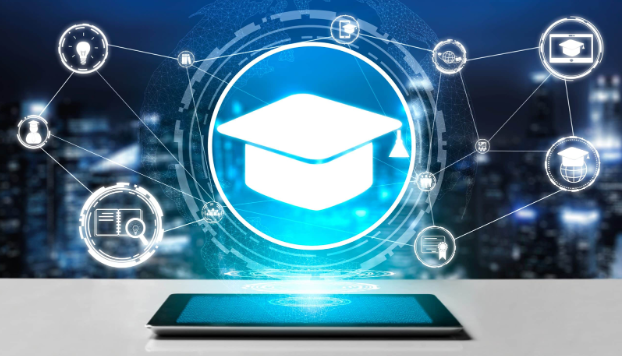
The impact of technology on education is not something that can easily be measured. An article from the National Library of Medicine uses a collection of studies that measured academic achievements, creativity, and skillset, to find an answer, the following is a breakdown of their findings. A 2011 study from the Commonwealth of Learning found that when students were supplied tablets they reported improvements in students’ “notetaking, organizational, and communication skills, and creativity“ (Tamin). According to another 2011 study, the use of digital learning platforms allowed students to “engage in independent and personalized learning, and conduct self- and peer-review” and allowed “opportunities for teacher assessment and feedback” (Jewitt). In these cases the use of technology improved students’ skillset and was more effective than teaching without it. Despite this, a 2014 study found “medium–low to low positive effects of technology integration” (Schmid), and although the Commonwealth study found that the studies increased skills and creativity, they found little effect on the academic achievements of students. Though the results are mixed on how effective technology is, there have been little negative effects found. Of 53 studies from 2022, “34 showed positive effects, 17 showed mixed results, and two reported negative effects” (Taherian). These studies worked with traditional computing technologies like digital learning platforms and tablets. However, with the increasing use of Artificial Intelligence, education technology has changed and will continue to.
Artificial intelligence (A.I.) is defined by Britannica as “the ability of a digital computer or computer-controlled robot to perform tasks commonly associated with intelligent beings”(Copeland). Today, however, most people know of A.I. through their interactions with the chatbots, content generation, and productivity tools that use it. The usage of A.I. has become quite controversial in recent years. Its excessive use of fresh water, creation of power outages, threat to the future of many careers, and spreading of, possibly dangerous, misinformation have given A.I. a bad reputation. Although these aspects should be taken into consideration, A.I. has also made positive advancements, especially in the medical field. According to an article from the Harvard Gazette, one A.I. model trained to scan for cancer “identified specific tumor characteristics previously not known to be linked to patient survival” (Pesheva). Just like in other areas, A.I.’s effect and possible future use in education is uncertain. According to one 2024 study, the adoption of ChatGPT at one institution “increased overall happiness, reflecting a positive emotional impact.”, “reduced the stress associated with academic workload” and “improved communication efficiency and collaboration in academic settings”(Cambra). However this same study also found that an overreliance on A.I can “reduce face-to-face social interactions, negatively impacting interpersonal skills and emotional intelligence”(Cambra). A.I. ,much like other education technologies, is a multifaceted innovation that when implemented correctly can improve education but when done incorrectly can cause harm.
It does not matter who is reading this article, I am sure you have noticed the changes in education throughout your lifetime, whether that be fifteen years or seventy. The question should not be, “Should new technologies be used in education?” but should rather be, “How can we implement new technologies correctly to benefit students and teachers the most?” Education, as all fields, is constantly evolving and to ignore technological advancements would be damaging. However, to adapt to them incorrectly would be just as harmful. In my next article, I will survey the students and teachers at Toll Gate High School to ask their opinions on the current implementation of technology at our school and find out what can be done to improve it.