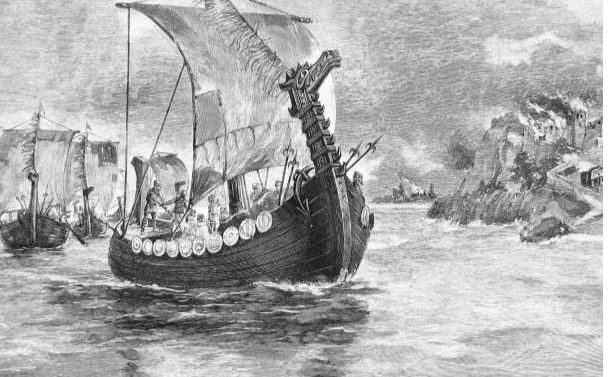
For centuries, we have had a certain image in mind when we think of the word “Viking.” We think of fierce, violent warriors with horned helmets who seem to have pillaging as their favorite hobby. Movies, shows, and plays popularized this image. But, is this truly who the Vikings were? How much do we know about Vikings? Behind the very entertaining stories about Vikings lies a different truth, a narrative that not many people seem to have heard.
Sometimes, people use the names “Vikings” and “Normans” as if the words refer to the same people. However, according to a Vikings article published by Yale, the Normans were “descendants of the original Vikings that had settled in northern France and the Frankish natives of the region.”
Stories depict Vikings as tall, blonde, vicious people; however, that is not how they actually were. According to the December 16, 2025, article, “9 Viking Myths Everyone Still Believes to Be True” by Damini Roy, the average height of most Viking men was 5’7” to 5’9”, making them the same height as other European males. As stated by a National Geographic article, Lise Lock Harvig of the University of Copenhagen, after studying the DNA of skeletons, concluded that Vikings would have a “healthy mix of blondes, redheads, and brunettes.”
Typically, people think that Vikings were filthy; however, this couldn’t be farther from the truth. These Vikings were shockingly cleaner if they were compared to their European neighbors. Things like tweezers, razors, combs, and ear cleaners have been uncovered by archaeologists. Sadly, it is very unlikely that Vikings actually had tattoos as they are usually depicted as having, as there is no clear evidence.
As savage as they may have been seen as, they were not any more savage than others of that time period. They would have local assemblies that were referred to as “Things.” These assemblies would cover important political matters, laws, and what punishments were to be had if the laws were broken. They may have seemed to have short, violent lives; yet, they would typically live into their 50s or 60s.
One of the most popular myths about Vikings is that they wore horned helmets. As stated by the video titled “5 Myths about Vikings that everyone believes” by Stephanie H. Smith,of Ted Ed, “this image was popularized in 19th-century operas, specifically Richard Wagner’s The Ring Cycle.” Most of the sources provided for this article have stated the same thing.
Another of many misconceptions about the Vikings is that they were all a single group/nation. They were not. As stated by National Geographic, Vikings were “more accurately small groups ruled by elected chieftains” that would work together to execute raids on foreign countries. Following this, the Australian National Maritime Museum explained that Viking societies were “peasant communities.” There were four levels in the society. These levels were Nobles, Jarles, free people, and peasants (including slaves).
When it came to their violence, they were no more violent than other people of that time. They would most likely not use the “blood eagle” as a torture method; it would most likely be performed on a dead individual. Vikings would also not drink from their enemies’ skulls. This idea is just an inaccurate translation from Ole Worm, a poet, who was referring to “branches growing out of animal skulls” (i.e., horns).
At the end of the day, the illusion of Vikings being a ferocious group that only liked committing violent acts with their horned helmets was more myth than what they really were like. They were people from various backgrounds, traders, farmers, and lawmakers, with their own customs. Ultimately, who the Vikings truly were is much more complex than it seems.